
VIP member
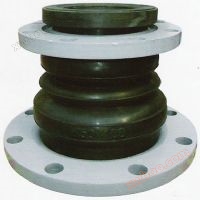
JDX rubber reducing joint
JDX rubber reducer joint, also known as reducer, reducer damper, reducer rubber soft joint, rubber reducer joint, pipeline damper, shock absorber thro
Product details
JDX rubber reducing joint

Reducing rubber joints are also known as reducers, reducing dampers, reducing rubber flexible joints, rubber reducing joints, pipeline dampers, shock absorbers, and flexible rubber joints. The rubber joint ball is composed of an inner rubber layer, a reinforcement layer with multiple layers of scraped nylon curtain fabric, and an outer rubber layer composite rubber tube. The rubber materials used vary depending on the medium, including natural rubber, styrene butadiene rubber, butyl rubber, nitrile rubber, EPDM rubber, chloroprene rubber, silicone rubber, fluororubber, and so on. Rubber joints with different diameters have functions such as heat resistance, acid resistance, alkali resistance, corrosion resistance, wear resistance, and oil resistance.
The main feature of reducing rubber joints is that they can solve the problem of different diameters when connecting metal pipes, and also have the function of shock absorption and noise reduction, which can save pipeline installation parts and reduce costs. It consists of an inner rubber layer, reinforced with nylon curtain fabric, a rubber sphere with an outer rubber layer composite, and a loose metal flange.
The reducing rubber joint is characterized by high pressure resistance, good elasticity, large displacement, balanced pipeline deviation, vibration absorption, good noise reduction effect and convenient installation. The reducing rubber joint can be widely used in water supply and drainage, circulating water, HVAC, fire protection, paper making, pharmaceutical, petrochemical, ships, pumps, compressors, fans and other pipeline systems. The ordinary type is used to transport air, compressed air, water, seawater, oil, acid, alkali, etc. between -15 ℃ and 120 ℃. Special type is used for transporting the above-mentioned media or oil, concentrated acid and alkali, solid materials above -30 ℃~250 ℃
Online inquiry
-
Contacts
-
Company
-
Telephone
-
Email
-
WeChat
-
Verification Code
-
Message Content
-